What Services Does a Construction Site in Eugene Need?
Any contractor searching for construction portable toilet rental near Texas job sites or here in Oregon runs into the same baseline: sanitation, waste, fencing and storage, all sized to crew count.
Most job sites need four things running at once: sanitation, waste hauling, site security and a dry place to lock up materials. That means portable toilet rental or a standard porta potty rental for the crew, a roll-off dumpster rental for debris, temporary fence rental around the perimeter, and either a storage container rental or a mobile office trailer rental for tools and plans. Bigger crews in Eugene often add a handwashing station rental near the break area, since OSHA 1926.51(a)(1) requires an adequate supply of potable water at every place of employment. If work involves coatings or pesticides, 1926.51(f)(1) kicks in and washing facilities become mandatory, not optional. We stage most of this out of routes that already cover River Road, 2.4 miles north, and Springfield, 9.2 miles east, so delivery windows for Eugene sites stay tight. Roll-off placement needs about 60 feet of straight clearance behind the truck, which matters on tighter lots downtown.
How Many Portable Toilets Does OSHA Require for Construction Sites?
OSHA portable toilet requirements for construction set the ratio at one toilet for 20 workers or fewer, one seat and one urinal per 40 workers once you pass 20, and one seat and one urinal per 50 workers at 200 or more, under 1926.51(c). That table drives almost every unit count on our quotes, and our OSHA Portable Toilet Requirements page walks through it by crew size. Cal OSHA portable toilet requirements for construction follow a similar structure for jobs running under California rules, so a crew splitting work between Oregon and California should plan counts for each site separately rather than assume one ratio covers both. Contractors running crews near Coburg, 10.5 miles northeast, or Junction City, 13.4 miles north, usually order in blocks of four to six standard units once headcount clears 40. If the crew is applying paint, coatings, herbicides or insecticides, 1926.51(f)(1) requires washing facilities on top of the toilet count, not instead of it. Need an exact number for your crew size? How Many Porta Potties Do I Need breaks it down by worker count and shift length, and our porta john rental page covers the same units by a different name jobsite crews tend to use.
How Much Does Construction Site Sanitation Cost in Eugene?
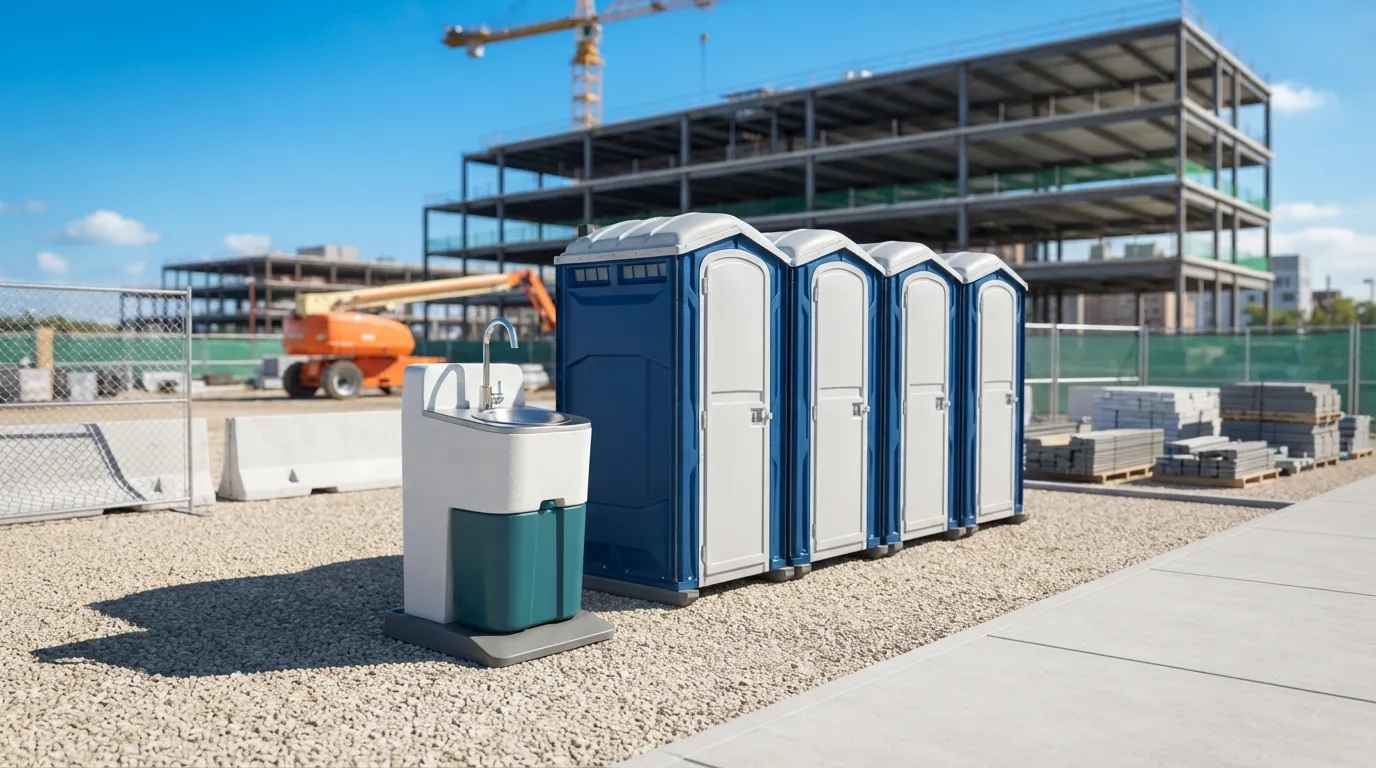
Portable toilet rental for construction sites cost runs 100 to 350 dollars a day for a standard unit and 130 to 500 dollars a week depending on service frequency and site access. Roll-off dumpsters run 51 to 112 dollars a day or 426 to 778 dollars a week, and most delivery fees land between 50 and 500 dollars depending on distance and rush timing. Multi-week jobs usually make more sense on a monthly porta potty rental than repeated weekly orders.
| unit | day | week | month |
|---|---|---|---|
| standard toilet | 100-350 | 130-500 | 125-325 |
| dumpster | 51-112 | 426-778 | 91-500 |
| ADA unit | 200-400 | 120-240 | - |
| temporary fence | 30-75 | - | - |
Weekend rates for a standard unit run 125 to 400 dollars, which matters for crews wrapping a short job before a Monday inspection. See full breakdowns on Porta Potty Rental Cost, Porta Potty Rental Per Day and Dumpster Rental Cost. If your site needs ADA-compliant access, ADA Accessible Porta Potty units follow ADA Standards 213.2, which requires at least 5 percent of clustered single-user units, and never fewer than one, to be accessible.
Do Construction Sites Need Handwashing and ADA Units?
Yes, in specific cases. General handwashing on a construction site is not automatically required by OSHA the way toilets are, but 1926.51(f)(1) makes washing facilities mandatory when crews are applying paints, coatings, herbicides or insecticides, or working around other harmful contaminants. That is a narrow trigger, and it is worth confirming against your actual scope before skipping a handwash station. ADA units come into play whenever the public, not just crew, accesses the site, and ADA Standards 404.2.3 sets a 32 inch minimum clear door opening, with 403.5.1 requiring a 36 inch clear route to the unit. A standard unit measures about 44 by 48 inches on the ground and stands roughly 92 inches tall, which most site plans in Eugene can accommodate without adjusting layout. Crews working near Creswell, 15.4 miles southeast, or Jasper, 16.1 miles southeast, should factor placement location into permit conversations early, since public right-of-way placement needs confirming with the city and we cannot cite a specific ordinance here without checking. Our Porta Potty Placement Guide and ADA Restroom Requirements pages cover layout logic in more depth. For sites also generating gray water from washdown, a portable sink rental pairs well with the toilet order.
How fast can Eugene Porta Pros deliver to a construction site?
Delivery windows depend on route and current bookings, but most standard orders in Eugene schedule within a few business days. Rush and emergency delivery is available; see Emergency Porta Potty Rental for same-window options when a site opens faster than expected.
What is the difference between a standard unit and an ADA unit?
A standard unit is built for speed and volume on a busy crew. An ADA unit is larger, with a 36 inch clear route and 32 inch door per ADA Standards, and it costs more per day because fewer are stocked. Order both together when the public may visit the site.
Can I rent a dumpster and toilets from the same company?
Yes. Ordering construction dumpster rental alongside toilets on one invoice is the most common combination we deliver in Eugene, and it usually means one delivery truck instead of two separate schedules.
Do I need a permit for a dumpster or fence on the street?
Possibly, depending on placement. Right-of-way rules vary by exact location, so confirm with the city before placing anything on a public street. See Dumpster Permit Requirements for what to ask about.
How often are units serviced on an active job site?
Weekly service is the baseline for standard sanitation loads per ANSI/PSAI Z4.3, but heavier crews often need twice-weekly pumping. Ask about frequency when you request a quote so the schedule matches your actual headcount.
Next step
Get a delivery date
Tell us the address, the dates and the headcount. We size the order and confirm the route.