
What does OSHA require for farm sanitation?
If you have hand-labor employees, OSHA 1928.110 sets the floor: potable water, toilets and handwashing within a quarter mile of where people work, at a ratio of one facility per 20 workers. That is a field sanitation rule written for agriculture, separate from the construction ratios in OSHA portable toilet requirements that a lot of pages quote by mistake. Eugene Porta Pros maps out unit count against crew size before the season starts, not after somebody complains. A standard portable toilet with a 60 to 70 gallon holding tank covers a normal crew for a week under the ANSI/PSAI Z4.3 baseline interval, which assumes one service visit a week for up to 10 users over a 40 hour week. Bigger crews or double shifts need either more units or faster turnaround, and we adjust the portable toilet rental schedule to match. Water access matters too: OSHA 1926.51(a)(1) calls for an adequate supply of potable water in all places of employment, and that pairs naturally with a handwashing station rental parked next to the toilets, not off in a shed. Farms near Junction City, 13.4 miles north of Eugene, and Coburg, 10.5 miles northeast, run this exact setup during grass seed harvest.
How many units does a farm actually need?
Count your crew, divide by 20, round up. That is the whole formula under 1928.110. A 45 person picking crew needs three units minimum, plus a handwashing setup within that same quarter mile radius. Our how many porta potties do I need guide walks through the math for mixed crew sizes and split shifts, but the agricultural rule is simpler than the construction one because it is distance-based, not headcount-tiered like OSHA 1926.51(c). Seasonal work near Cheshire, 15.4 miles northwest of Eugene, often means moving units as the harvest line moves, so we quote weekly rates instead of locking a farm into a full month. A standard unit rents by the week in the 130 to 500 dollar range depending on service frequency and distance, and monthly terms run higher because service visits stack up over four weeks. Farms that also need wash-down water for equipment, not just crew handwashing, sometimes add a portable sink rental at the same time. If pesticide or herbicide application is part of the operation, OSHA 1926.51(f)(1) requires washing facilities specifically for workers applying paints, coatings, herbicides or insecticides, which is a different trigger than the general field sanitation rule and worth planning for separately.
Where should units go on a working farm?
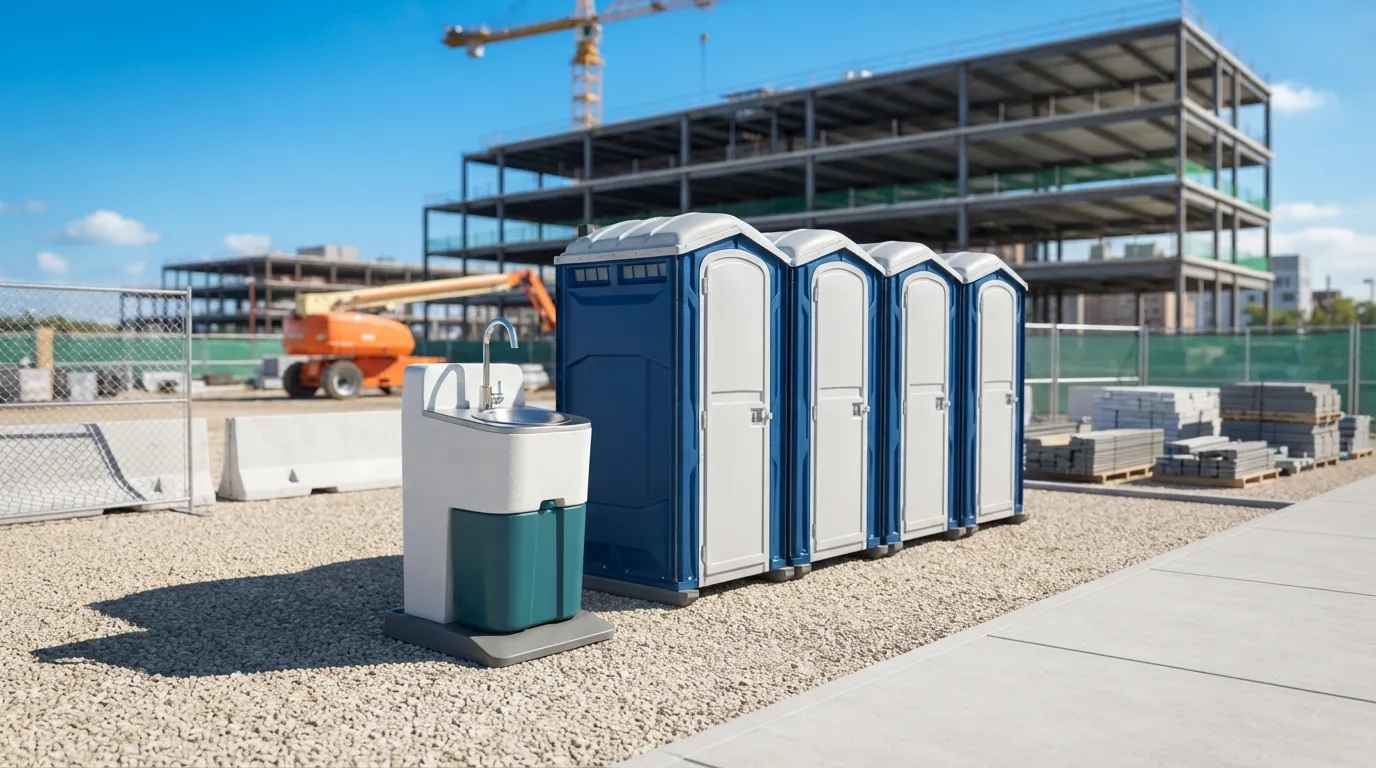
Set them where the crew actually stands, not where it is convenient for the truck. The quarter mile rule under 1928.110 is a maximum distance, not a target, and shaving that down cuts real walk time during a paid shift. Ground stability matters on farmland the way it does on a job site: our porta potty placement guide covers firm, level pad requirements so a 44 by 48 inch unit does not tip on soft or tilled ground. Delivery access counts too. A roll-off dumpster rental or a septic pumping service truck both need clear approach, and farm lanes are not always graded for it, so tell us about gate width and turf conditions when you book. Farms running bunkhouses or seasonal housing sometimes need a septic tank pumping cost check alongside the field units, since a 1,000 gallon residential-style tank is typically pumped every 3 to 5 years depending on household size and usage. Properties near Creswell, 15.4 miles southeast of Eugene, and Jasper, 16.1 miles southeast, mix field toilets with a permanent septic system, and we service both on the same route. For crews needing something sturdier than a standard unit, a deluxe flushable porta potty is available, and operations with disabled workers or visitors should look at ADA restroom requirements, since ADA Standards section 213.2 calls for at least one accessible unit in any cluster.
| unit | duration | typical price |
|---|---|---|
| standard | week | 200 |
| standard | month | 200 |
| septic | day | 250 |
Full pricing detail, including delivery fees, lives on porta potty rental cost and monthly porta potty rental.
How often do you service farm units during harvest?
Weekly is standard under the ANSI/PSAI Z4.3 baseline, but harvest crews running long hours often move to twice a week. Tell us your crew count and shift length and we will set a schedule that matches, not a generic default.
Can you deliver to remote farm access roads?
Yes, but tell us about gate width and road surface first. Our trucks need firm ground and enough turning space, similar to the 60 feet of straight clearance a roll-off delivery needs behind the truck.
Do farms need ADA-accessible units?
If workers or visitors with disabilities are on site, yes. ADA Standards section 213.2 requires at least one accessible unit in any cluster of single-user toilets, with a 60 inch turning circle under section 304.3.1.
What is the difference between farm and construction toilet rules?
Construction sites follow OSHA 1926.51(c), tiered by headcount. Farms with hand-labor crews follow 1928.110, based on a quarter mile walking distance and one facility per 20 workers. They are separate standards.
Can we add handwashing without full plumbing?
Yes. A handwashing station rental or hand sanitizer station rental sets up anywhere on the property, and 29 CFR 1910.141(d)(2) requires soap and towels or a hand drying device, not just sanitizer alone.
Next step
Get a delivery date
Tell us the address, the dates and the headcount. We size the order and confirm the route.