
What does OSHA require for handwashing stations?
OSHA splits this into two rules and people mix them up constantly. General construction sanitation runs through OSHA 1926.51(c), which sets toilet ratios: one facility for 20 workers or fewer, then a toilet seat and urinal per 40 workers as your crew grows past that, dropping to one per 50 once you hit 200 or more. That rule covers toilets, not sinks specifically. The washing mandate under 1926.51(f)(1) only kicks in where workers handle paints, coatings, herbicides or insecticides, or face similar contaminants. If your Eugene crew is framing and pouring concrete with no chemical exposure, you may not trigger that specific rule, but a handwashing station rental still makes sense for basic hygiene and it keeps you ahead of any inspector who asks. General industry sites, as opposed to construction, follow a different ratio table under OSHA 1910.141(c)(1)(i). And any washing station you do install needs soap and a way to dry hands, per 29 CFR 1910.141(d)(2). Hand sanitizer alone does not satisfy that standard. A hand sanitizer station rental can supplement a real sink, but it cannot replace one where the rule applies.
How many handwashing stations does my Eugene site need?
Match your station count to your crew size and your toilet count, since they scale together under the same logic as 1926.51(c). A site with 15 workers usually runs fine with one combo unit near the standard porta potty rental cluster. Once you cross 20 workers, plan for more coverage, and if paint or coating work is part of the scope, put a dedicated wash station right at that work zone, not just by the toilets. Farms and agricultural operations in the Eugene area follow a separate standard: OSHA 1928.110 calls for one facility per 20 hand-labor employees, reachable within a quarter mile walk, which matters for anyone running farm and agricultural restrooms out past River Road or Santa Clara. Event sites work differently again. A wedding or festival crowd needs stations sized to guest count and bar service, closer to what you would plan for festival restroom rental or wedding restroom rental jobs. If you are unsure where your project lands, the how many porta potties do I need guide walks through the same math for toilets, and station counts follow close behind.
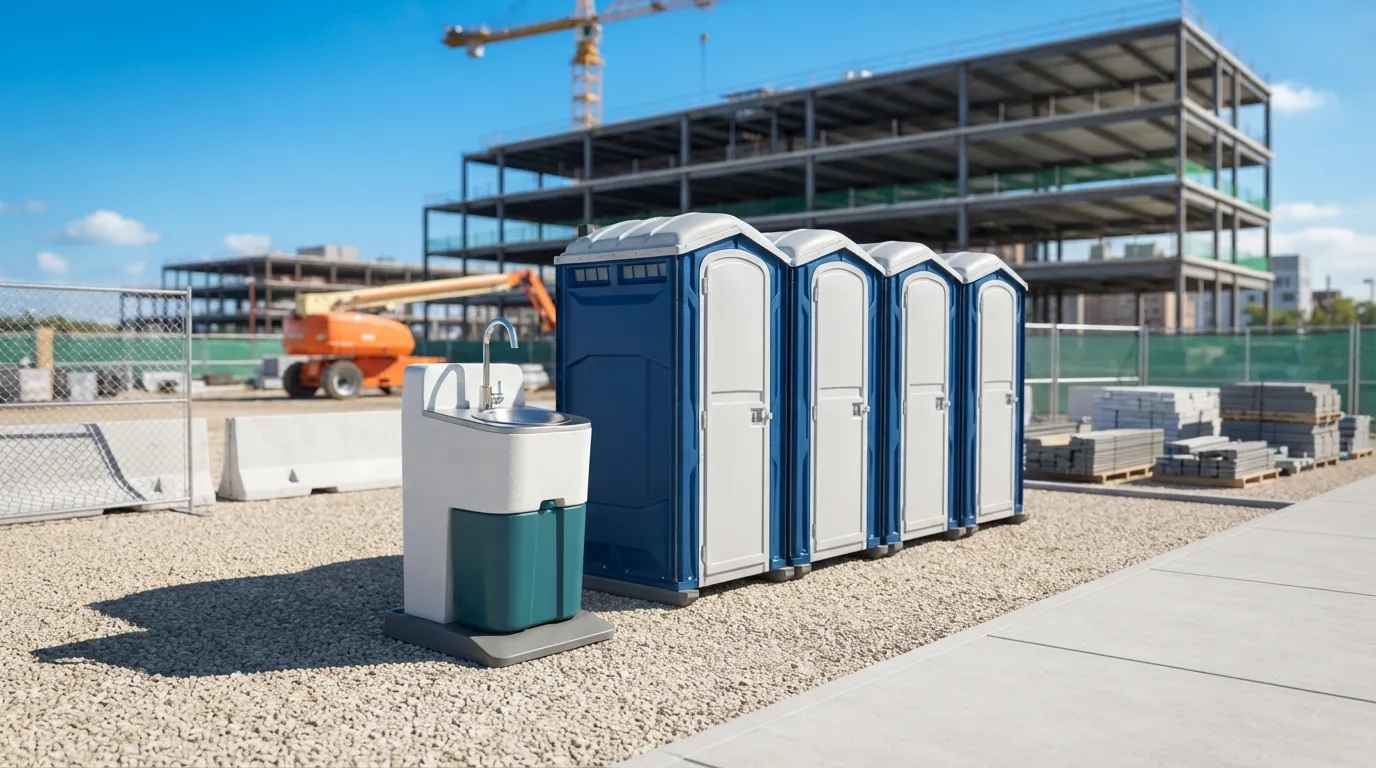
Where should handwashing stations go on site?
Put stations at the exit of any area where paint, coatings, herbicides or insecticides get handled, since that is the exact language in 1926.51(f)(1). On a general Eugene construction site, cluster them near your portable toilet rental units so workers hit both on one trip. ADA Standards section 403.5.1 calls for a 36 inch clear route to any accessible unit, and section 404.2.3 sets minimum door width at 32 inches, so keep gravel or plywood paths clear if your site sits on soft ground. Section 213.2 requires that at least 5 percent of clustered single-user units be accessible, with a minimum of one, which applies whether you are renting an ADA accessible porta potty or a paired wash station. Ground stability matters too: ADA 302.1 calls for stable, firm, slip-resistant surfaces, worth remembering on a rainy Eugene job in November. If your site touches a public sidewalk or right of way, placement there needs confirming with the city; we do not have a citywide rule on file, so check with the City of Eugene before you set anything at the curb. For jobs closer to Springfield, about 9.2 miles east, or Coburg, roughly 10.5 miles northeast, the same placement logic applies regardless of which jurisdiction issues the permit.
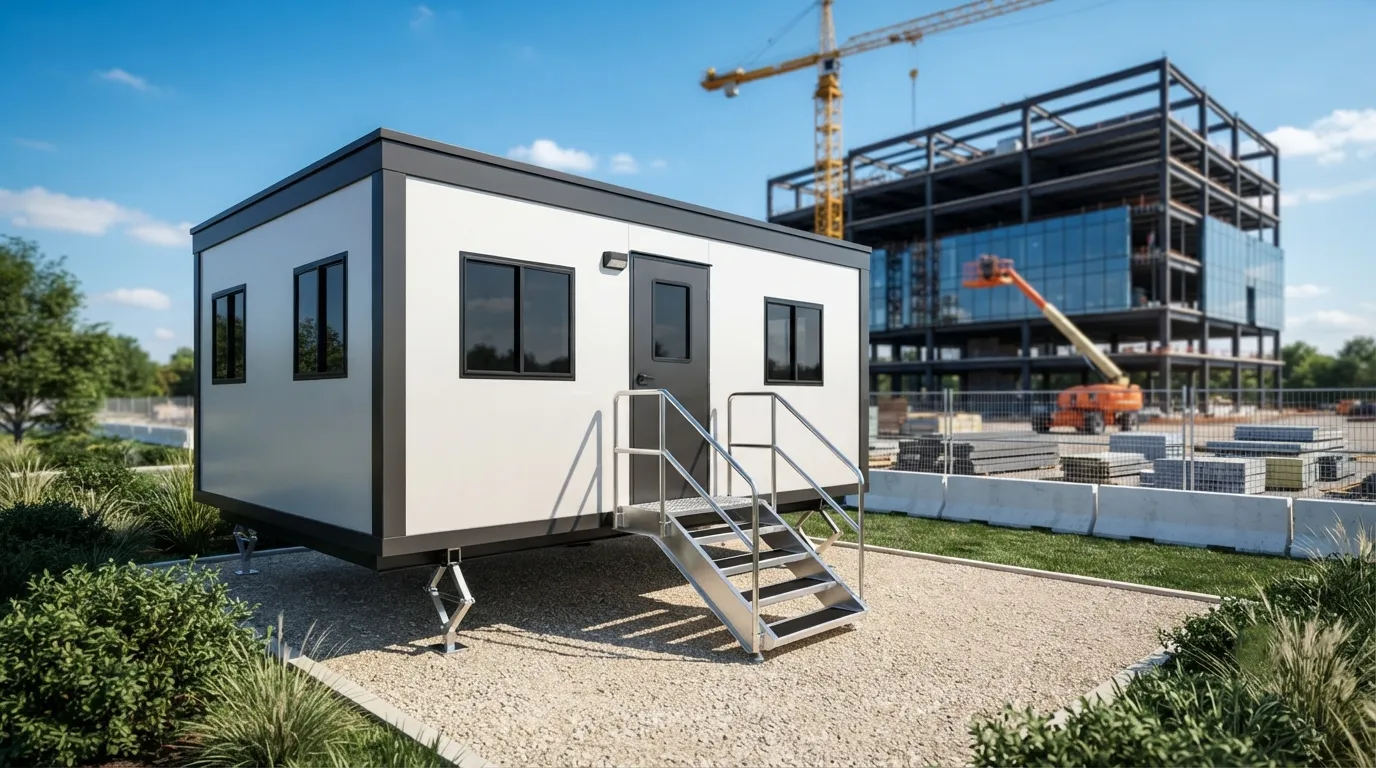
Do handwashing stations cost extra with a porta potty rental?
Some vendors bundle a station into the toilet order and some price it as an add-on, so ask before you sign. Pricing depends heavily on unit type and rental length, and the clearest way to see that spread is in a table.
| Service | Duration | Typical Price |
|---|---|---|
| Standard porta potty | Day | $150 |
| Standard porta potty | Week | $200 |
| Delivery fee | Day | $150 |
| Delivery fee | Week | $100 |
Delivery fees for a standalone portable sink rental tend to track the delivery fee band above rather than the unit price itself. Bundling a wash station with a porta john rental or a full portable restroom rental order often keeps the delivery cost down to one trip instead of two. For a broader breakdown by rental length, see porta potty rental cost, porta potty rental per day, and monthly porta potty rental.
Do I need a handwashing station if I already have hand sanitizer on site?
No. Sanitizer does not meet 29 CFR 1910.141(d)(2), which specifically requires soap and a towel or hand-drying device at any washing facility. Sanitizer stations work as a supplement, not a substitute, especially anywhere 1926.51(f)(1) applies.
Does every construction site in Eugene need one?
Only if the work involves paints, coatings, herbicides or insecticides, or similar contaminants, per 1926.51(f)(1). General sanitation under 1926.51(c) still applies to every site, but that rule governs toilets, not washing specifically.
Can I rent a handwashing station on its own, without a toilet?
Yes. A portable sink rental can go out solo for events, food trucks, or agricultural crews. Delivery fees run separately, so pairing it with a toilet order on the same trip usually saves a second delivery charge.
How often does a handwashing station need to be serviced?
ANSI/PSAI Z4.3 sets a baseline of one service visit weekly for up to 10 users across a 40 hour week. Higher headcounts or event weekends need more frequent visits. Check how often are porta potties cleaned for the fuller service picture.
What is the difference between OSHA 1926.51(c) and 1926.51(f)(1)?
Section (c) sets toilet ratios by crew size for every construction site. Section (f)(1) is narrower: it only requires washing facilities where paints, coatings, herbicides or insecticides are in use. They are separate rules with separate triggers.
Next step
Get a delivery date
Tell us the address, the dates and the headcount. We size the order and confirm the route.