
How many portable toilets do I need?
The math depends on how many people use the site and for how long. According to OSHA 1926.51(c)(1), construction sites need one toilet facility for every 20 workers or fewer, then one toilet seat and one urinal per 40 workers up to 20, scaling to one per 50 workers at 200 or more. An event in Eugene with 50 guests for a few hours needs fewer units than a construction crew working there for two weeks. Read our full guide on how many porta potties you need to match your exact scenario.
What's the difference between standard and deluxe units?
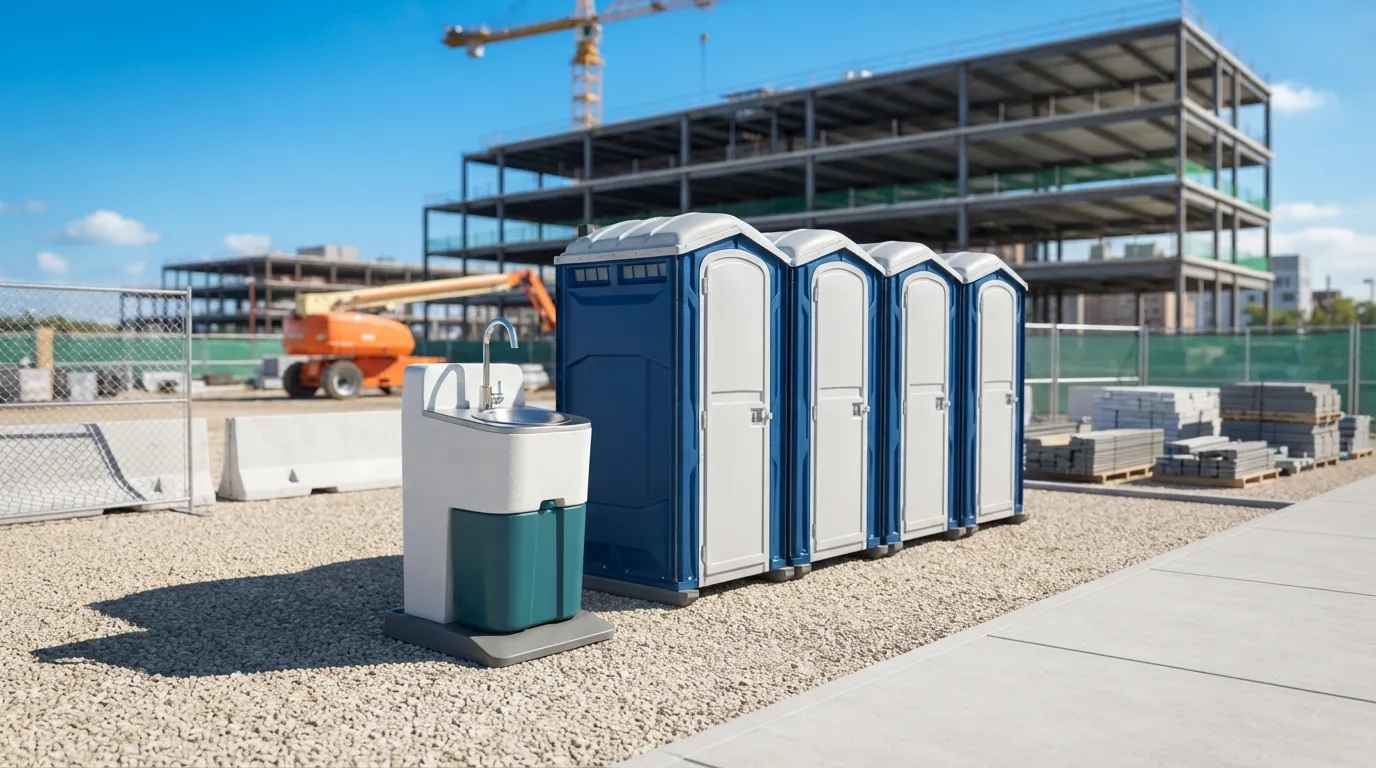
A standard unit holds 60 to 70 gallons and stands about 92 inches tall, measuring 44 by 48 inches on the ground. It's cleaned once per week under the baseline service interval from ANSI/PSAI Z4.3. A deluxe flushable porta potty has a flushing mechanism, hand sanitizer and better ventilation. Standard units cost roughly $100 to $350 per day in Eugene. Deluxe units run higher because of the built-in features. If you're renting for an event and want guests to feel they're in a proper restroom, deluxe is the upgrade. For construction or farm work, standard does the job.
Do I need an accessible unit?
Yes, if your site has employees or guests with mobility limits. An ADA accessible porta potty meets ADA Standards section 213.2, which requires at least 5 percent of single-user units in a cluster to be accessible, and never fewer than one. The unit needs a 60 inch diameter turning circle and a minimum 32 inch clear door opening per ADA Standards section 404.2.3. In Eugene, events and job sites with 10 or more people should include at least 1 accessible unit.
How often do portable toilets get serviced?
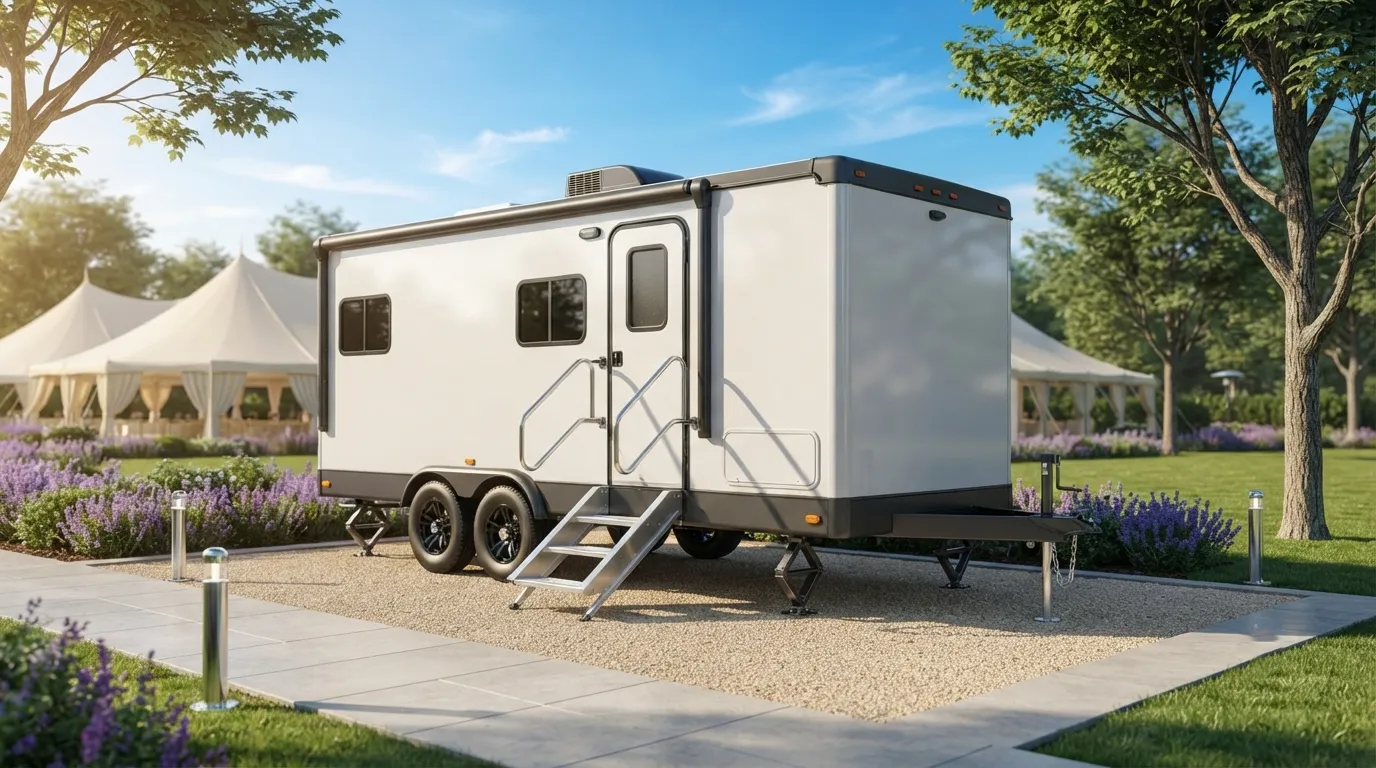
The baseline interval from ANSI/PSAI Z4.3 is one service visit per week for up to 10 users over a 40 hour week. High-traffic events need more frequent pumping. We can arrange multiple visits per week if your Eugene site demands it. Call us with your user count and we'll recommend a schedule. Restroom trailers are serviced on a custom schedule because they handle higher volume.
What can't go in a dumpster?
Electronics, batteries, paint, asbestos, tires and hazardous materials are banned from most dumpsters. Read what cannot go in a dumpster for the full list. We rent roll-off dumpsters for construction debris, household junk, yard waste and most renovation materials. If you're unsure, ask us before you throw it in.
How much does septic pumping cost?
A residential septic tank in Eugene is typically pumped every 3 to 5 years, depending on tank size and household size. Call for a quote on septic pumping service or septic tank pumping cost. The cost varies by tank volume and the distance the truck has to travel. We also service grease traps, which are pumped when fats, oils, grease and solids reach 25 percent of the liquid depth.
Do handwashing stations actually work on construction sites?
Yes. According to 29 CFR 1910.141(d)(2), washing facilities must be provided with soap and with towels or a hand drying device. Hand sanitizer alone doesn't meet the rule. A portable handwashing station lets your crew wash properly. If your Eugene crew is applying paints, coatings, herbicides or insecticides, OSHA 1926.51(f)(1) requires on-site washing, not just hand sanitizer.
How far do you deliver in Eugene?
We serve Eugene and the surrounding towns. Springfield is 9.2 miles east, Coburg is 10.5 miles northeast, and Creswell is 15.4 miles southeast. Delivery fees start at $50 to $150 per week depending on distance and equipment. Call with your address and we'll quote you.
Why rent a storage container?
A storage container holds tools, materials and equipment off-site during renovations, construction or events. It keeps the job clean, reduces theft and frees up indoor space. We rent 20 foot and 40 foot units by the month in Eugene.
Next step
Get a delivery date
Tell us the address, the dates and the headcount. We size the order and confirm the route.