
How Often Does a Septic Tank Need Pumping?
Every household is different, and that's the honest answer. A 1,000 gallon septic tank typically gets pumped every 3 to 5 years, with the exact interval driven by tank size and how many people live in the house. A family of five running a garbage disposal daily fills a tank faster than a retired couple in the same size house, and our porta potty rental checklist has a similar logic for sizing portable sanitation to household or crew size. If you've never had yours checked, septic tank pumping cost in Eugene is worth understanding before you call around, and our how often to pump a septic tank guide breaks the math down further. Restaurants and commercial kitchens run on a different clock entirely. A grease interceptor needs pumping once fats, oils, grease and solids build up to 25 percent of the liquid depth, which can happen in weeks, not years, depending on volume. If you manage a kitchen, our grease trap pumping page covers that schedule. Waiting too long on either system costs more than the pump-out itself, because solids that harden inside pipes and drain fields turn a routine visit into an excavation job. We'd rather set you up on a schedule than get a panicked call in July.
What Are the Warning Signs a Septic Tank Is Full?
Slow drains, gurgling pipes and standing water over the drain field are the big three. If multiple fixtures in the house drain slowly at once, that's usually not a clogged trap, it's a tank at capacity. A sour smell near the tank lid or drain field, especially after rain, is another sign the system is struggling. Grass that's suspiciously greener over the drain field, or soggy ground out there even in dry weeks, points the same direction. Our septic tank warning signs page walks through each one in more detail. None of these mean disaster yet, but they mean it's time to call, not wait, the same way our porta potty placement guide tells you when a unit's location is causing problems rather than just being inconvenient. A tank that backs up into the house is a different situation entirely, and if that happens we treat it as emergency septic service, not a routine appointment. Homes on private systems anywhere from River Road, 2.4 miles north of Eugene, out to Creswell, 15.4 miles southeast, run into the same warning signs, and the fix is the same: get it pumped before it backs up.
What Does Septic Pumping Service Include?
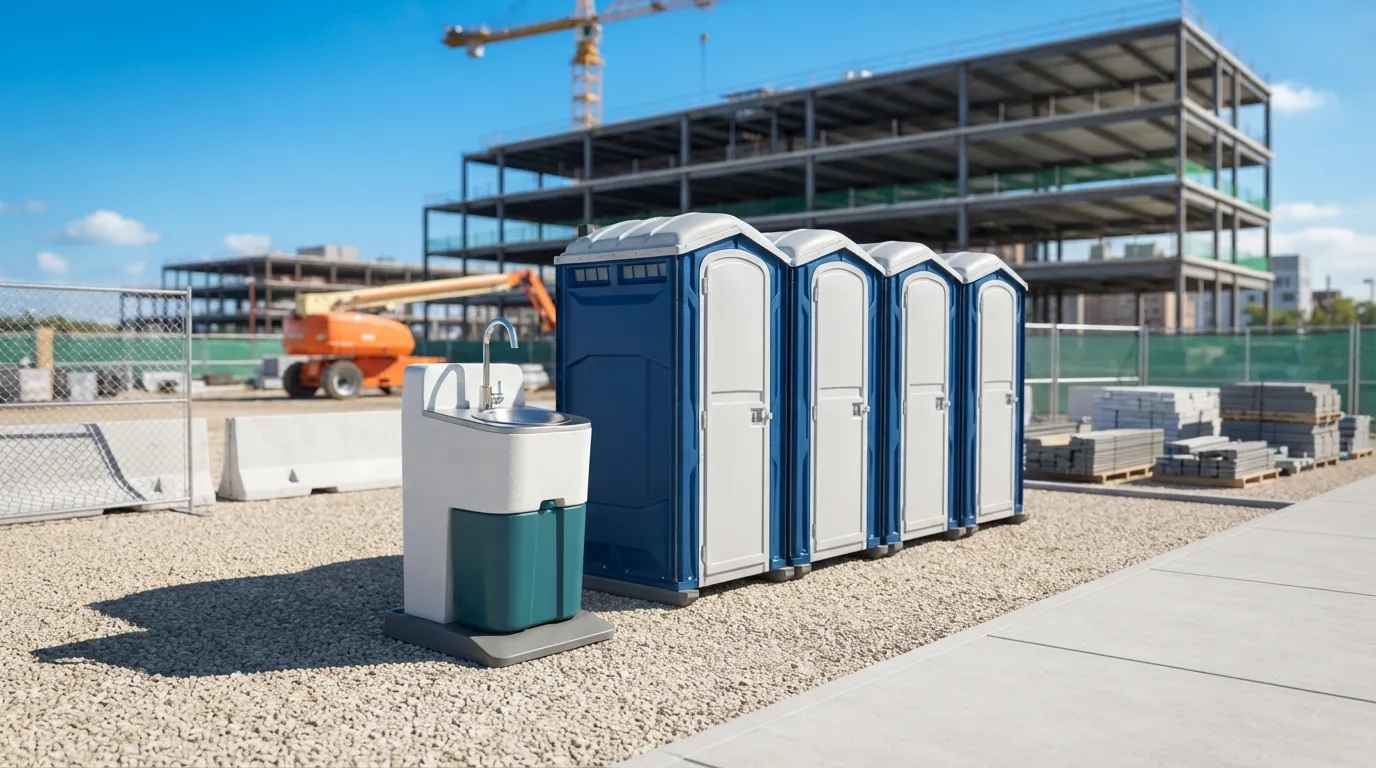
A real pumping visit is more than sticking a hose in the tank. We locate and uncover the access lid, pump the tank fully, and check the baffles and the outlet for wear while we're in there. If the tank has an effluent filter, we clean it. We also do a visual check of the drain field area for standing water or unusual settling, since that tells us if the field itself is struggling, not just the tank. This is different from septic tank cleaning, which is a deeper scrub-out sometimes needed on older tanks with heavy scale, and it's a different service entirely from septic tank warning signs troubleshooting, which is about spotting the problem before we ever get there. Adequate potable water access matters on any job site too, and under OSHA 1926.51(a)(1), employers have to provide it, which we keep in mind on construction properties where our crews are working near active septic systems. We haul everything off site, and there's no odor lingering in the yard once the truck pulls out, much like how do porta potties smell explains for our other equipment when it's serviced on schedule. For rural properties or ag operations, our farm and agricultural restrooms and field sanitation setups pair well with a septic visit, since hand-labor operations often need both water and pumping service handled the same week.
How Much Does Septic Tank Pumping Cost?
Cost depends mostly on tank size and how accessible the lid is. Here's what a standard visit runs in Eugene:
| Service | Duration | Typical Price Range |
|---|---|---|
| Septic pumping | Day rate | $150 to $300 |
| Septic pumping | Weekend service | $50 to $150 |
| Holding tank rental | Month | $100 to $250 |
These are the bands we see across the market, and where your job lands depends on tank size, how far the truck has to travel, and whether the lid needs digging out. A property with a buried, unmarked lid takes longer than one with risers already installed, and that shows up in the final number, the same way dumpster rental cost shifts based on site access on the debris removal side of our business. Our septic tank pumping cost page has more detail on what moves the price up or down. If you're comparing this against portable options for a work site instead, our porta potty rental cost and porta potty rental per day pages cover that side of the business. Weekend calls run at a premium because they pull a crew off a day off, so if your schedule allows it, a weekday appointment saves money over an emergency weekend visit, and our monthly porta potty rental page shows the same discount pattern for longer commitments on toilets.
Do You Offer Holding Tank Rental?
Yes. A holding tank is different from a septic system. It doesn't treat anything, it just holds wastewater until it's pumped out, which makes it useful for construction sites without sewer hookups, remote events, or properties with a septic system down for repair. Our holding tank rental runs on a monthly basis, and we handle the pump-out schedule so you're not tracking tank levels yourself. This pairs naturally with other site setups, like a temporary power pole or a light tower rental on a job site that's still waiting on utilities. If you're setting up a full site in Eugene, our construction site services page covers how holding tanks, portable toilets and handwashing station rental work together. Under OSHA 1926.51(c), construction sites need one toilet facility for 20 workers or fewer, so a holding tank often runs alongside a bank of standard porta potty rental units rather than replacing them. We size the tank to your crew and your timeline, not a one-size guess, the way how many porta potties do I need sizes a bank of toilets to headcount.
Can You Respond to a Septic Emergency?
Yes, and fast response matters here because a backed-up septic system isn't something a household can just wait out. If you're dealing with sewage backing into the house, standing water over the tank, or a system that's failed outright, that's emergency septic service territory and we treat it as a priority call, not a next-week appointment. We cover Eugene and drive out to nearby communities too, including Springfield at 9.2 miles east, Santa Clara at 4.4 miles north, and Coburg at 10.5 miles northeast. A resident of Junction City, 13.4 miles north, or Jasper, 16.1 miles southeast, gets the same response, just a longer drive built into the timeline. If your property also needs short-term sanitation while the septic system is offline, we can pair emergency pumping with a portable restroom rental or an ADA accessible porta potty so the household isn't without a working bathroom during repairs. Call as soon as you see backup, not after it's spread, the same urgency we bring to an emergency porta potty rental request when a work site's sanitation goes down without warning.
How much does it cost to pump a 1,000 gallon septic tank?
Pricing depends on access and location, but a standard day-rate pumping visit in Eugene typically runs $150 to $300. Weekend service, if you need it outside a weekday schedule, runs $50 to $150 as a separate rate. Tank size and lid accessibility both affect where you land.
How do I know if my septic tank needs pumping now?
Slow drains across multiple fixtures, gurgling pipes, sewage odor near the tank or drain field, and soggy ground over the field are the signs to watch. If water is backing up into the house, that's an emergency, not a routine call. Don't wait once you notice more than one sign at once.
What is the difference between septic pumping and septic cleaning?
Pumping removes the liquid and solid waste from the tank on a routine schedule. Cleaning is a deeper service, scrubbing scale and buildup off tank walls, usually needed on older tanks or ones that went too long between pump-outs. Most properties only need pumping, similar to how most job sites just need portable toilet rental serviced on a normal cycle rather than a deep clean-out.
Can a full septic tank cause damage if I wait?
Yes. Solids that aren't pumped out in time can clog the outlet baffle and flow into the drain field, where they clog the soil itself. Once a drain field is damaged, the fix is excavation and replacement, which costs far more than a pump-out ever does.
Do you service grease traps too?
Yes, separately from residential septic tanks. A grease interceptor needs pumping once fats, oils, grease and solids reach 25 percent of the liquid depth, which often happens faster than a household tank fills. Restaurants and commercial kitchens in Eugene are the most common customers for this service.
What areas around Eugene do you cover for septic pumping?
We cover Eugene, OR, directly and drive out to River Road, Santa Clara, Springfield, Coburg, Junction City, Creswell, Cheshire and Jasper. Distance affects scheduling for non-emergency visits more than price. Emergency calls get priority regardless of which nearby community you're in.
Next step
Get a delivery date
Tell us the address, the dates and the headcount. We size the order and confirm the route.